- Ambawadi, Ahmedabad
- Mon - Fri: 8:00 am - 7:00 pm


Clear Vision Starts Here
Understand & Correct Refractive Errors
We help children and adults see clearly by diagnosing and treating vision problems like Myopia, Hyperopia, Astigmatism, and Lazy Eye.
Year of Experience
0
+
Patients Served
0
+
Successful Surgeries
0
+
Learning is Visual
0
%
Children Have Vision Issues
1 in
What is Developmental Vision Evaluation?
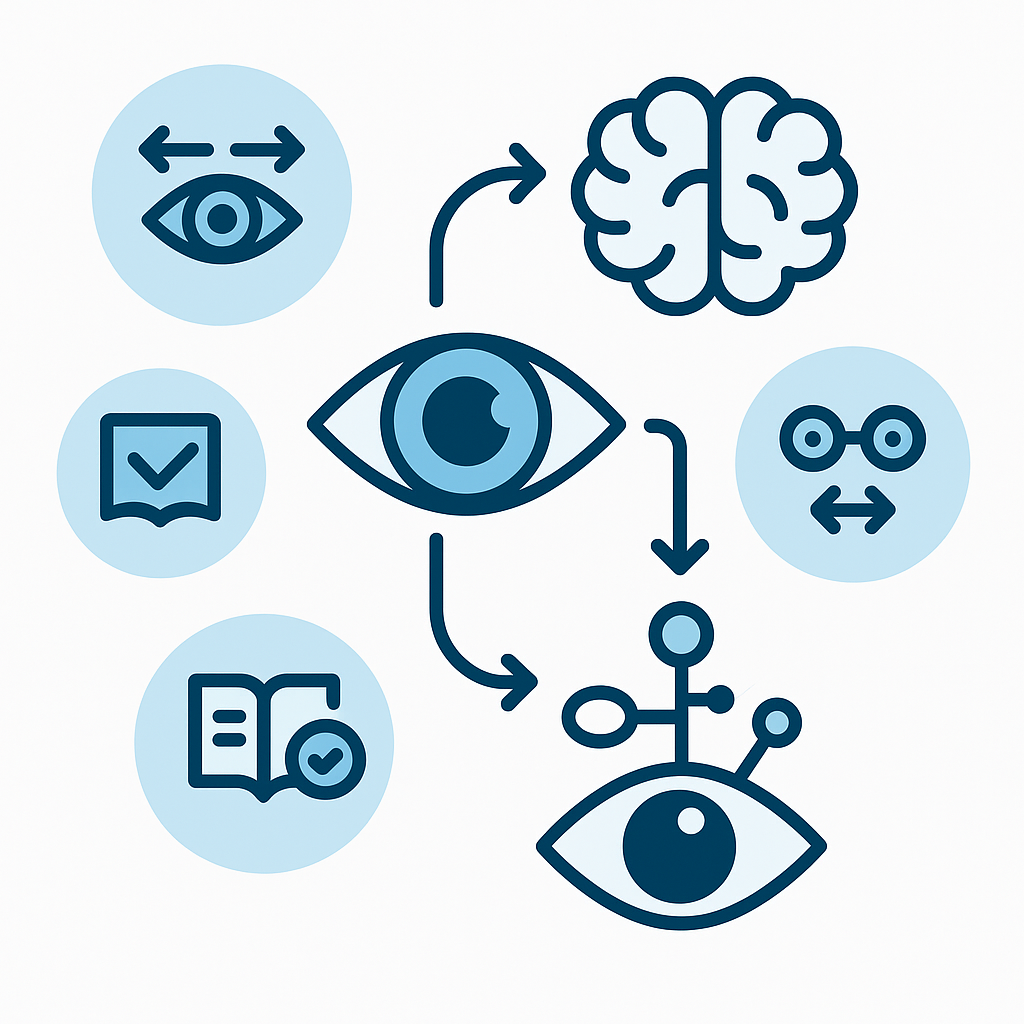
A Developmental Vision Evaluation should be the first step when a child or adult is having trouble reading or learning. First, our doctors get a detailed history of the case. Then, they do a full sensorimotor and visual perceptual assessment.
This test measures eye coordination and visual processing skills related to reading fluency, letter reversals, handwriting, attention/concentration, and overall learning abilities.
After testing, our doctors will figure out if any visual diagnoses are affecting how well a student does in school. If so, they will prescribe the right lenses, give a written report that includes classroom adjustments, and plan for therapeutic solutions to visual problems that will help the student do well in school in the future.
Comprehensive Assessment
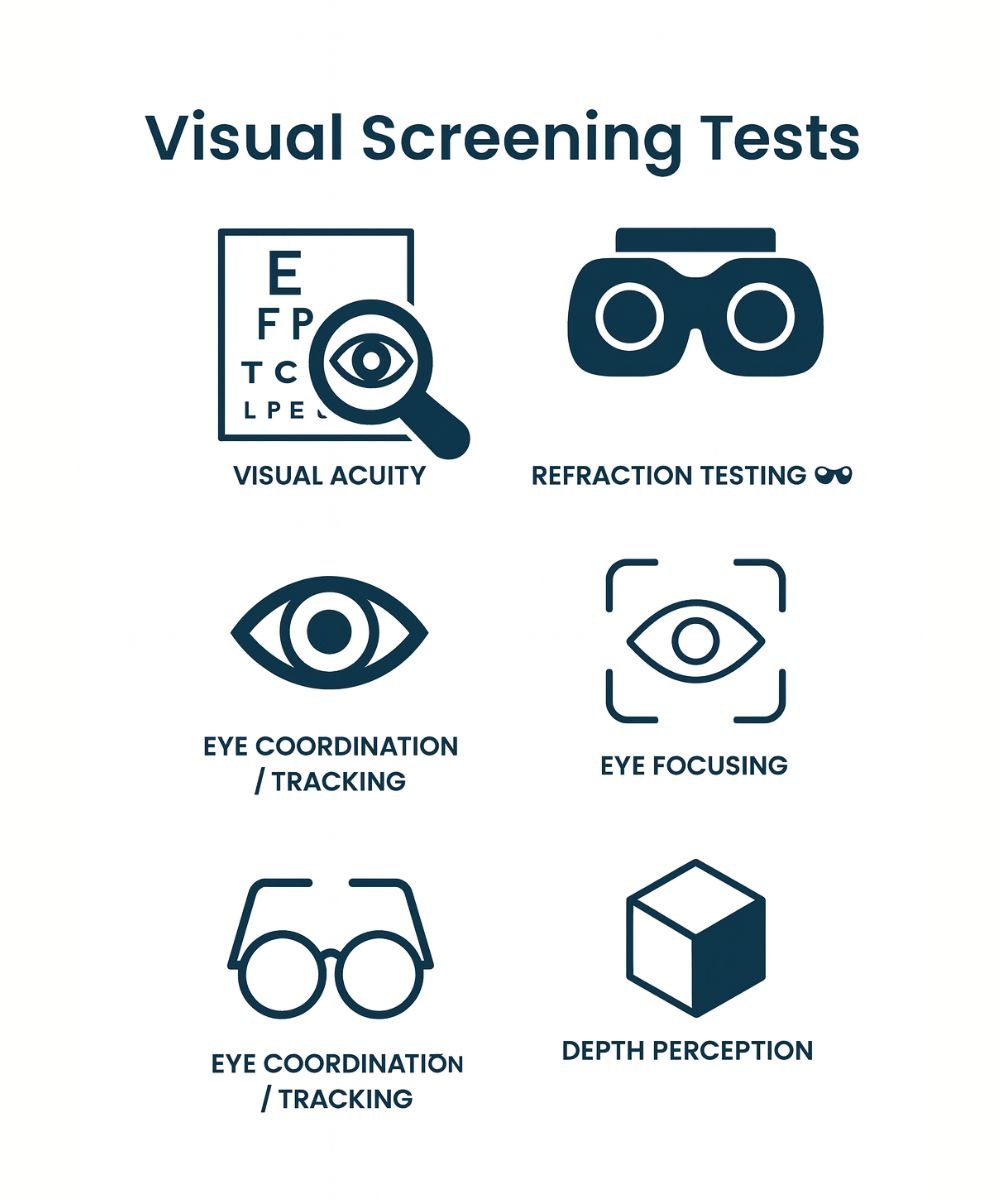
We also provide a thorough eye health and vision evaluation to determine the health of the eyes, visual acuity (eyesight) and refractive condition for appropriate corrective lenses when needed.
Types of Refractive Errors We Treat
Comprehensive care for all vision correction needs
Sensorimotor Testing
Testing eye coordination and movement abilities
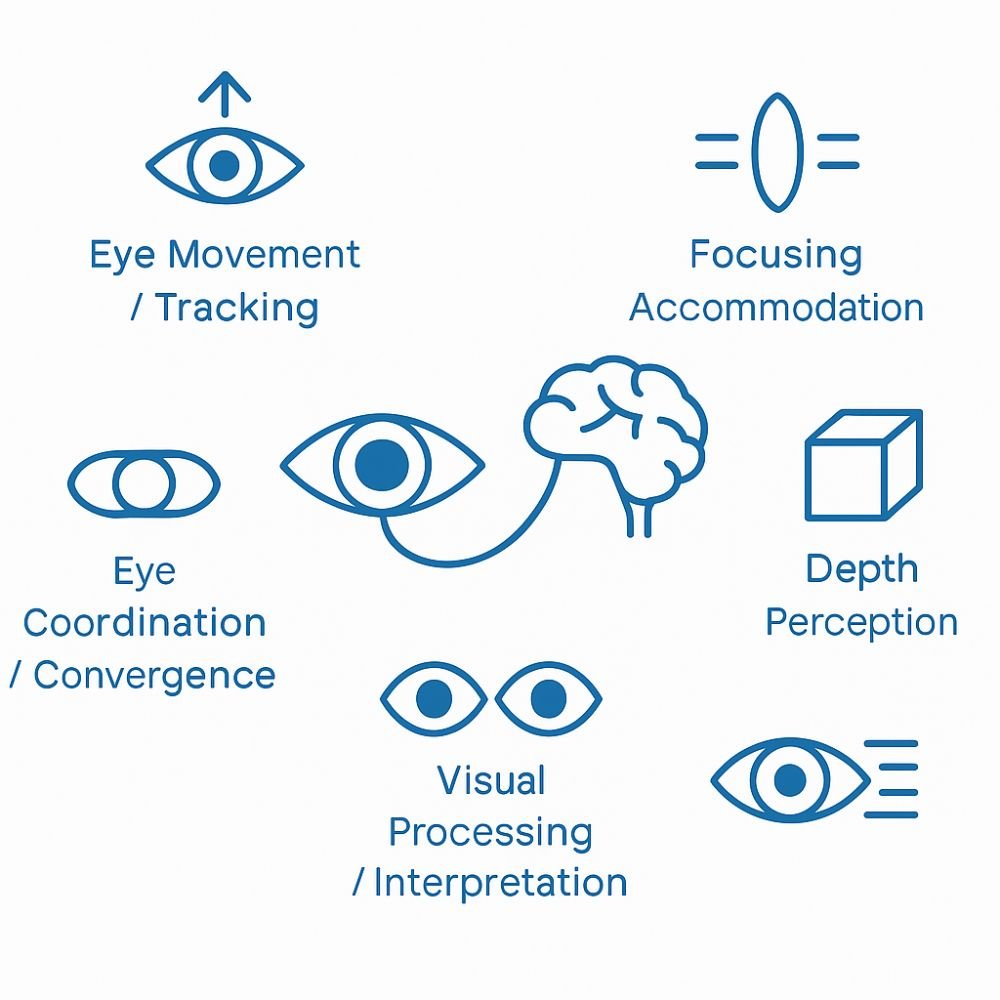
- Binocular Vergence (Eye Teaming) Testing – Measurement of convergence, ranges of fusion and coordination of the two eyes working together
- Oculomotor (Eye Tracking) Testing – Measurement of pursuits and saccades (micro eye movement in reading)
- Accommodation (Eye Focusing) Testing – Measurement of eye focusing relating to the clarity of near vision and near visual attention and looking near to far
Visual Perceptual Testing
Testing how the brain processes visual information
- Visual Discrimination – The ability to see likes from differences
- Visual Memory – The ability to visually remember the characteristics of a shape/object after a brief presentation
- Visual-Spatial Relationships – The ability to see the difference among forms based on orientation
- Visual Sequential Memory – The ability to remember for immediate recall a series of forms in their specific order of presentation
- Visual Figure-Ground – The ability to perceive a form visually, and to find this form hidden in a clutter of background
- Visual Directionality – The ability to identify language symbols based on their directional orientation
Visual Integration Testing
Testing coordination between vision and motor skills
- Visual-Motor Integration – The ability to analyze visual information and reproduce with eyes and hands working together as paired learning tools for fine motor skills and handwriting
- Visually Directed Gross Motor Function – The ability to effectively integrate the two halves of the body for skillful coordination and mobility
- Visual-Vestibular Integration – The ability to integrate the visual system and the vestibular system for proper orientation and balance
Baseline Reading Testing
Standardized testing for academic performance
- Standardized testing for word recognition and fluency
- Assessment of reading comprehension abilities
- Evaluation of reading speed and accuracy
Visual Development Milestones
Key developmental stages in your child's visual system
Birth - 4 months
- Follows moving objects with eyes
- Begins to focus on faces
- Eyes begin to work together
5 - 8 months
- Better eye-body coordination
- Judges distance accurately
- Develops color vision
9 - 12 months
- Uses eyes and hands together
- Judges distance well for grasping
- Throws object with aim
1 - 2 years
- Eye-hand coordination improves
- Depth perception develops
- Recognizes familiar objects
1 - 2 years
- Eye-hand-body coordination
- Identifies details in pictures
- Can sort shapes and color
3 - 5 years
- Vision approaches adult level
- Can copy simple shapes
- Recognizes letters and numbers
Warning Signs to Watch For
Signs that may indicate developmental vision problems
- Follows moving objects with eyes
- Covering one eye while reading
- Difficulty copying from board
- Reversing letters or numbers
- Avoiding reading or close work
- Short attention span for visual tasks
- Tilting head to one side
- Difficulty copying from board
- Poor handwriting or drawing skills
- Losing place while reading
Important Note:
If you notice any of these signs, schedule a developmental vision evaluation. Early detection and treatment can prevent long-term learning difficulties.
Benefits of Early Evaluation
Why developmental vision assessment is crucial for your child's success
Early Detection
Identify vision problems before they impact learning
Academic Success
Ensure visual skills support classroom performance
Confidence Building
Help children feel confident in visual tasks
Sports Performance
Enhance visual skills needed for athletic activities
Developmental Vision Services
This evaluation will determine the presence of:
Amblyopia (Lazy Eye)
Comprehensive assessment and treatment planning for lazy eye conditions affecting visual development and learning.
Strabismus (Cross or Turned Eye)
Detection and evaluation of eye alignment issues that can impact binocular vision and depth perception.
Concerned About Your Child’s Vision Development?
Early diagnosis can make a lifetime of difference. Whether it’s difficulty in reading, writing, or focusing at school — our specialized developmental vision evaluations can help identify and correct the issue.
Take the first step today and secure your child’s visual future!
Why Choose Us?
Don’t wait— Early action leads to better outcomes!
- 10+ Years Pediatric Vision Expertise
- Over 20,000+ Patients Treated
- Friendly & Child-Centered Environment
- Proven Success with Early Intervention
Make an Appointment